
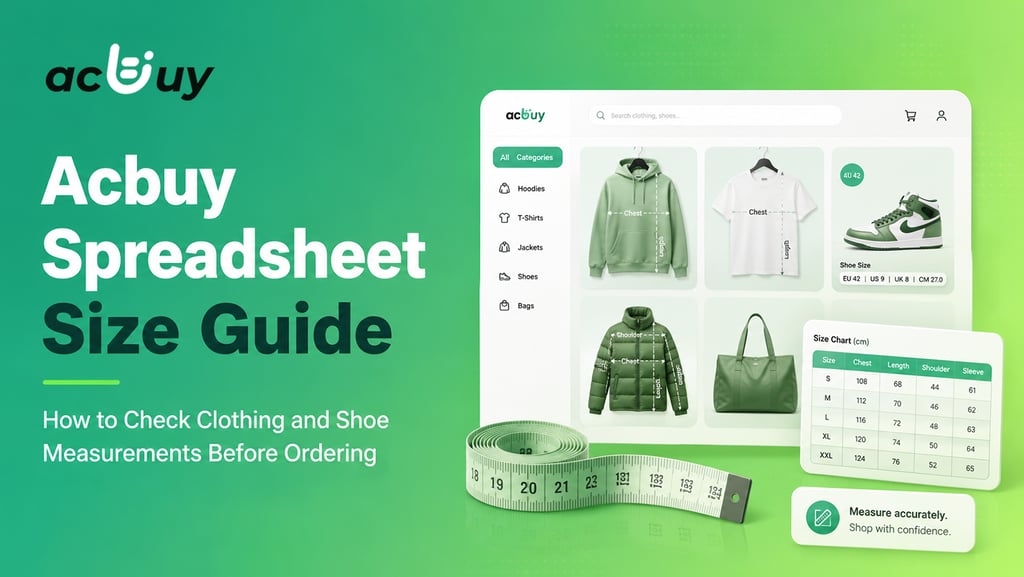
Acbuy Spreadsheet Size Guide: How to Check Clothing and Shoe Measurements Before Ordering
Learn how to use the Acbuy Spreadsheet Size Guide to compare clothing measurements, check shoe sizing, read Weidian size charts, and choose suitable sizes before ordering through Acbuy.
GoGo Finder
7/16/202611 min read
Introduction
Finding an interesting hoodie, T-shirt, jacket, or pair of sneakers is only the first step when shopping through Chinese marketplaces. Choosing the right size can be more difficult because different sellers may use different measurement methods, product cuts, and size labels.
A size marked “L” on one Weidian listing may fit differently from an “L” shown by another seller. Shoe labels can also vary between Chinese, US, UK, and European sizing systems.
The Acbuy Spreadsheet Size Guide explains how to evaluate clothing and shoe measurements before ordering. Instead of depending only on familiar size labels, buyers should compare actual measurements, understand product fit, and check the individual seller’s size information.
This approach can reduce sizing mistakes when browsing clothing, sneakers, and accessories through the Acbuy Spreadsheet.
Why Weidian Sizing Can Be Inconsistent
Chinese marketplace sellers do not all follow one universal sizing standard.
Two listings for similar hoodies may use the same S, M, L, and XL labels but provide different chest widths, garment lengths, or sleeve measurements. The same issue can appear across T-shirts, jackets, pants, and shoes.
Sizing differences may result from:
Different manufacturers
Different product cuts
Oversized or slim-fit designs
Seller-specific size charts
Different measurement methods
Variations between product batches
Conversion between regional sizing systems
This is why buyers should not assume that their normal local size will automatically match every Weidian product.
The measurement details shown on the individual listing should normally take priority over the letter printed on the size option.
Measurements Matter More Than the Size Label
The most important principle in this Acbuy clothing size guide is simple:
Compare measurements, not only size labels.
A buyer who normally wears a medium may need a small in an oversized garment or a large in a slim-fitting jacket. The size name alone does not reveal how the item will actually fit.
For clothing, the most useful measurements usually include:
Chest width or bust
Shoulder width
Garment length
Sleeve length
Waist
Hip
Inseam
Leg opening
Not every listing includes every measurement. Focus on the measurements most relevant to the type of garment being purchased.
For example, chest width and garment length are especially important for T-shirts and hoodies, while waist and inseam matter more for pants.
How to Measure Clothing You Already Own
One of the safest ways to choose marketplace clothing is to compare the seller’s size chart with an item you already own and like.
Do not rely only on your body measurements. Measuring a well-fitting garment often provides a more practical reference because it reflects the fit you already prefer.
Step 1: Choose a Similar Garment
Select an item that is similar to the product you plan to buy.
Examples include:
Compare a hoodie with another hoodie
Compare a T-shirt with a similar T-shirt
Compare a jacket with a jacket of a similar cut
Compare pants with pants that have a similar rise and fit
An oversized T-shirt should not be compared directly with a tight athletic shirt because their intended fits are different.
Step 2: Lay It Flat
Place the garment on a flat surface without stretching the material.
Smooth out major folds so the measurements are consistent.
Step 3: Measure the Important Areas
For tops, measure:
Chest from armpit to armpit
Shoulder from seam to seam
Length from the highest shoulder point to the hem
Sleeve from the shoulder seam to the cuff
For pants, measure:
Waist across the top
Hip width
Outseam or total length
Inseam
Thigh width
Leg opening
Step 4: Compare with the Seller’s Chart
Match your measurements with the closest size shown in the listing.
Do not choose automatically based on the label. A measured XL may be closer to your current medium garment depending on the seller’s sizing system.
Chest Width and Chest Circumference Are Not the Same
This is one of the most common measurement mistakes.
Some product charts show the width of a garment laid flat. Others show the full chest or bust circumference.
For example, a flat chest width is usually measured from one armpit to the other. The full circumference would normally be approximately twice that measurement.
Before comparing numbers, determine whether the chart is showing:
Half-width measurement
Full circumference
Body recommendation
Finished garment measurement
Never double or halve a measurement unless the listing makes the method clear.
When the measurement format is uncertain, compare the numbers with other garments or similar listings before ordering.
How to Read a Weidian Size Chart
A Weidian size chart may contain Chinese labels, abbreviated English translations, body recommendations, or garment measurements.
Common information can include:
Height
Weight
Chest or bust
Shoulder
Length
Sleeve
Waist
Hip
Recommended size
Some charts recommend a size based on height and body weight. These recommendations can be useful as a secondary reference, but actual garment measurements are usually more reliable.
Two people with the same height and weight may have different proportions and different fit preferences. One may prefer a loose fit, while another prefers a more fitted silhouette.
Use height-and-weight recommendations as supporting information rather than the only basis for choosing a size.
Understand the Measurement Unit
Most Weidian clothing measurements are shown in centimeters.
International buyers should always confirm whether a listing uses:
Centimeters
Millimeters
Inches
Chinese shoe sizing
European shoe sizing
Do not assume that an unfamiliar number represents the sizing system you normally use.
For clothing, centimeters are common. For shoes, a listing may show EU numbers, Chinese size labels, foot length, or internal shoe length.
The most reliable number is often the actual measurement rather than the regional size name.
Oversized, Regular, and Slim Fits
The intended fit of a garment changes how the measurements should be interpreted.
Oversized Fit
Oversized T-shirts and hoodies are intentionally wider or longer. Buyers may not need to size up, even if they normally prefer loose clothing.
Check:
Chest width
Shoulder width
Garment length
An oversized shoulder may extend beyond the natural shoulder line by design.
Regular Fit
Regular-fit clothing is designed to sit closer to conventional proportions.
Compare it directly with a similar item already in your wardrobe.
Slim Fit
Slim jackets, shirts, and pants may have less room through the chest, waist, thighs, or sleeves.
Buyers who prefer comfort or layering should pay closer attention to these measurements rather than choosing only by the normal letter size.
Cropped or Boxy Fit
Streetwear products may also use cropped or boxy cuts.
A boxy item can be wide but relatively short. A buyer looking only at chest width might overlook the shorter garment length.
The Acbuy Spreadsheet clothing sizing workflow should therefore consider both overall size and intended silhouette.
How to Choose the Right Hoodie Size
Hoodies are common in the Acbuy Spreadsheet, but their sizing can vary significantly.
Before selecting a hoodie, check:
Chest width
Shoulder width
Garment length
Sleeve length
Whether the material is thick
Whether the design is oversized
Whether you plan to layer clothing underneath
A thick hoodie may feel tighter than a lightweight hoodie with similar measurements. Buyers planning to wear another garment underneath may need additional room through the chest and sleeves.
Do not automatically size up because a hoodie comes from a Chinese seller. The actual chart may already use an oversized cut.
How to Choose a T-Shirt Size
For T-shirts, chest width and length are usually the most useful measurements.
Consider whether you want:
A fitted appearance
A regular fit
A loose fit
An oversized streetwear silhouette
A longer or cropped length
A shirt that is wide enough may still be too short. Similarly, a long shirt may not provide the chest fit you expect.
Compare both dimensions with a T-shirt you already wear comfortably.
For oversized T-shirts, also check shoulder width because dropped shoulders can change how the product looks when worn.
How to Choose Jacket and Coat Sizes
Jackets require more careful sizing because buyers may wear layers underneath them.
Important measurements include:
Chest width
Shoulder width
Sleeve length
Jacket length
Hem width
Available space for layering
A jacket that matches the exact chest measurement of a fitted T-shirt may not provide enough room for a hoodie underneath.
Consider the purpose of the jacket:
Lightweight outer layer
Thick winter jacket
Fitted fashion jacket
Oversized streetwear jacket
Waterproof shell
The same body measurements may require different garment measurements depending on the intended use.
How to Choose Pants and Shorts
Pants should not be selected using waist labels alone.
Review:
Waist measurement
Hip width
Rise
Inseam
Total length
Thigh width
Leg opening
Whether the waistband stretches
Some sellers list a relaxed waist range for elastic-waist pants. Others list the unstretched measurement.
For jeans and fitted pants, hip and thigh measurements can be as important as the waist.
Buyers should also consider the intended cut:
Slim
Straight
Relaxed
Wide-leg
Cargo
Cropped
Two pairs of pants with the same waist can look and feel very different because of the rise, thigh width, and leg shape.
Acbuy Shoe Size Guide
Shoes need a different approach from clothing.
The safest starting point is usually foot length in centimeters, not the size number printed on another pair of shoes.
US, UK, EU, and Chinese labels are not always perfectly consistent across sellers and shoe types. A size conversion can provide a rough reference, but it should not replace the product’s actual size information.
This Acbuy shoe size guide recommends the following process.
How to Measure Your Foot Length
Step 1: Prepare the Measurement
Place a sheet of paper on a hard floor next to a wall.
Wear the type of socks you expect to use with the shoes.
Step 2: Position Your Foot
Stand with your heel lightly touching the wall and your full weight on the foot.
Standing is preferable because the foot may spread slightly under body weight.
Step 3: Mark the Longest Point
Mark the end of the longest toe.
The longest toe is not always the big toe.
Step 4: Measure the Distance
Measure from the edge touching the wall to the toe mark.
Repeat the process for both feet and use the larger measurement as the reference.
Step 5: Compare with the Product Chart
Use the seller’s foot-length or insole guidance to select the closest appropriate option.
Do not add an arbitrary amount unless the seller explains how the measurement should be used.
Foot Length, Insole Length, and Shoe Size Are Different
Buyers should understand three separate concepts:
Foot Length
The physical length of the buyer’s foot.
Insole Length
The internal removable insole or usable interior measurement of the shoe.
Size Label
The regional or seller-assigned number attached to the product.
These values are related but not identical.
An insole usually needs to be longer than the foot itself to provide toe room. However, the necessary difference depends on the shoe type and fit.
Athletic shoes, boots, formal shoes, and slides may all require different amounts of internal space.
Follow the product-specific recommendation whenever one is available.
Wide Feet and Shoe Shape
Foot length alone does not determine whether a shoe will fit comfortably.
Buyers with wide feet should also consider:
Toe-box shape
Upper material
Shoe silhouette
Whether the model is known to fit narrow
Whether thicker socks will be worn
A pointed or narrow shoe may feel tight even when the length is technically correct.
A flexible textile upper may provide more room than a rigid synthetic or leather-like upper.
When two size options appear close, examine the intended shoe shape and compare it with footwear you already own.
Sneakers, Boots, Slides, and Other Footwear
Different footwear categories should not always use the same sizing assumption.
Sneakers
Consider foot length, width, intended sock thickness, and whether the style fits narrow or wide.
Boots
Allow for sock thickness and make sure the forefoot and shaft design suit the intended use.
Slides and Sandals
Check whether the seller measures the footbed, sole, or recommended foot length.
Formal Shoes
These may fit more closely and have less flexible uppers, making width particularly important.
The product’s own measurement guide should remain the primary reference.
China Size to US, UK, and EU Size
Many buyers search for a universal China size to US size or China size to EU size conversion.
Conversion charts can be useful as a starting point, but they are not guaranteed to match every Weidian product.
The same EU size can fit differently depending on:
Manufacturer
Shoe shape
Insole construction
Product batch
Seller labeling
Intended gender or unisex sizing
For this reason, use regional conversion only as a preliminary reference.
The recommended priority is:
Actual foot or garment measurement
Product-specific seller chart
Fit description
Regional size conversion
This order reduces dependence on labels that may not be consistent.
Manual Measurement Differences
Seller charts may include a small manual measurement tolerance.
Garments are often measured by hand, and the final item may differ slightly from the stated number. The material may also affect the measurement through stretch, thickness, or washing.
A small difference does not automatically mean the chart is wrong.
When your preferred measurement sits exactly between two sizes, consider:
Desired fit
Material stretch
Whether the item will be layered
Whether the product is designed to be oversized
Which measurement matters most for that garment
Avoid choosing solely based on one number when several measurements are available.
What to Do When a Size Chart Is Missing
A missing or unclear size chart increases the risk of choosing incorrectly.
When size information is unavailable:
Check whether the seller has another listing for the same product
Look for a similar item with clearer measurements
Review available option descriptions
Save the listing and compare it later
Avoid guessing based only on product photos
Consider choosing a better-documented alternative
A listing with clearer measurements may be a better decision than an attractive listing with insufficient information.
The Acbuy Spreadsheet product comparison process can help buyers keep multiple alternatives instead of committing to one unclear product.
Common Clothing Size Mistakes
Avoid these frequent errors:
Choosing Only by S, M, L, or XL
Letter sizes are not consistent across every seller.
Assuming Chinese Sizes Always Run Small
Some do, but many modern streetwear products use oversized cuts. Always check the measurements.
Confusing Width with Circumference
Determine whether the chart shows a flat measurement or the full body circumference.
Ignoring Garment Length
A product may fit through the chest but still be too long or too short.
Ignoring Fit Style
Oversized, cropped, regular, and slim products should not be evaluated in the same way.
Using Only Height and Weight Recommendations
These cannot account for body proportions or personal fit preference.
Common Shoe Size Mistakes
Common footwear errors include:
Using only a US or EU label
Measuring only one foot
Measuring while seated
Ignoring foot width
Confusing foot length with insole length
Choosing based on another brand’s size alone
Forgetting sock thickness
Assuming every seller uses the same conversion
A five-minute foot measurement can be more useful than relying on several generic conversion charts.
A Practical Acbuy Spreadsheet Sizing Workflow
Use this process before ordering clothing or shoes:
1. Find the Product
Browse the relevant clothing or footwear category in the Acbuy Spreadsheet.
2. Save More Than One Option
Keep two or three similar listings when possible.
3. Locate the Size Information
Check the product page for garment measurements, foot-length guidance, or seller recommendations.
4. Measure a Reference Item or Your Foot
Use a garment you already own or measure both feet while standing.
5. Compare the Most Important Measurements
Focus on the measurements that control the fit of that product type.
6. Consider the Intended Fit
Decide whether you want slim, regular, relaxed, oversized, or room for layering.
7. Review the Selected Option Before Payment
Make sure the chosen color, model, and size are correct before submitting the order.
This Acbuy Spreadsheet sizing workflow turns size selection into a comparison process rather than a guess.
Sizing Advice for Buyers in Different Regions
International buyers may begin with different familiar size systems.
United States
US buyers should not assume their normal US letter or shoe size transfers directly. Use centimeters and product-specific measurements.
United Kingdom
UK footwear numbering differs from US sizing. Confirm foot length before relying on a conversion.
European Union
EU shoe sizes may look familiar on Weidian listings, but seller-specific fit differences can still apply.
Canada
Canadian buyers commonly use US-style sizing but should still prioritize actual product measurements.
Australia and New Zealand
Local clothing and footwear labels may not align directly with Chinese seller charts. Compare centimeters rather than only the named size.
The most reliable GEO strategy is not creating one rigid conversion for every region. It is teaching users to move from their local label to a measurable reference.
Why Accurate Sizing Improves the Overall Order
Correct sizing does more than improve comfort.
It can also help buyers:
Avoid ordering several unnecessary backup sizes
Build a more focused shopping list
Reduce preventable order dissatisfaction
Compare similar products more effectively
Make more confident purchasing decisions
Plan future orders using saved measurements
Keep your measurements recorded so you do not need to restart the process each time.
A simple note containing your preferred T-shirt width, hoodie length, pants measurements, and foot length can make future Acbuy Spreadsheet browsing more efficient.
Final Checklist Before Ordering
Before selecting a clothing or shoe size, confirm:
Have I checked the seller’s specific size chart?
Did I compare actual measurements rather than only labels?
Do I understand whether the chart uses width or circumference?
Have I considered oversized, slim, cropped, or regular fit?
Did I measure a similar garment I already own?
For shoes, did I measure both feet?
Did I account for width and sock thickness?
Am I relying on the product chart rather than a generic conversion alone?
Did I review the selected size before submitting the order?
If several answers are “no,” pause and review the listing again.
Final Thoughts
The Acbuy Spreadsheet Size Guide helps buyers move away from guessing and toward measurement-based decisions.
Clothing labels such as S, M, L, and XL are not universal. Shoe labels across Chinese, US, UK, and EU systems can also vary. Actual garment dimensions, foot length, intended fit, and the individual seller’s chart provide more useful information.
When browsing clothing and footwear through the Acbuy Spreadsheet, save multiple options, compare measurements, and choose the product that best matches your preferred fit.
A careful size check takes only a few minutes, but it can significantly improve the overall buying experience.
→ Explore Acbuy Spreadsheet
→ Read the Acbuy Spreadsheet Guide
→ How Buyers Compare Similar Products Before Making a Decision
→ How Experienced Buyers Build Better Shopping Lists Before Ordering
→ What New Buyers Should Know Before Using Acbuy
→ Acbuy News & Shopping Insights
© 2026 acbuyhub.org. User-driven directory of public product data. No sales or transactions.